Application
Petrochemicals, Oil & Gas Processing
The petrochemical industry transforms crude oil and natural gas into essential building blocks for diverse products, from solvents and detergents to plastics, resins, fibers, and pharmaceuticals. These building blocks are olefins (e.g., ethylene, propylene, and butadiene) and aromatics (e.g., benzene, toluene, xylene, and naphthalene) derived from hydrocarbons.
Oil refineries use fluid catalytic cracking, while chemical plants use steam cracking (for olefins) and catalytic reforming (for aromatics) to produce these feedstocks for further transformations, supporting industries worldwide.


The oil and gas industry is divided into upstream (e.g., exploration and production), midstream (e.g., transportation and storage), and downstream (e.g., refining, processing, and distribution).
Upstream focuses on extraction, midstream on transport and storage, and downstream on transforming raw materials into valuable products. These complex processes demand rigorous monitoring of parameters like pH and conductivity to optimize efficiency, control costs, and ensure product consistency.
How Hamilton Supports Your Downstream Oil and Gas Processing Workflows

The petrochemical, oil, and gas industry is highly complex and regulated, requiring strict adherence to safety, sustainability, and compliance standards.
Process Analytical Technologies (PAT) can help companies achieve efficiency, cost control, and quality assurance goals, improve their bottom line, and reduce their environmental impact.
Hamilton advanced sensor solutions play a vital role in optimizing downstream oil and gas processing workflows. During desalting, salts and water are removed to prevent corrosion and fouling of refining equipment. Distillation sees the crude oil separated into distinct fractions, including large hydrocarbons like naphtha or kerosene-based on their boiling points. These fractions undergo further cracking and reforming to yield smaller hydrocarbons, such as paraffins and olefins, which serve as key feedstocks for petrochemical synthesis.
Explore Our Petrochemicals, Gas, and Oil Processing Solutions and Applications in Detail
Choose an outcome below to see personalized product recommendations.
Polilyte Plus pH Sensors
Polilyte Plus
Polilyte Plus Traditional pH sensor offer multiple electrical connectors and length options along with a standard mV output compatible with most transmitters and controllers.

MecoTrode pH Sensors
MecoTrode
MecoTrode pH sensors excel in chemical processes with extreme pH values. They feature low-alkaline-error H-glass or HF-glass for use in media containing hydrofluoric acid, both stable at high temperatures and requiring low maintenance. Ideal for industrial applications, Hamilton complements these advanced sensors with expert support for your critical pH monitoring needs.

The ChemoTrode is a robust sensor, designed for measuring pH in demanding applications in pharmaceutical and chemical industries.


Hamilton's OxyTrode Pt is a maintenance-free ORP sensor with three ceramic diaphragms to reduce flow potential in pipe installations, featuring a robust platinum wire coil for reliable redox measurements in chemical, wastewater, and industrial applications.

The ChemoTrode is our most robust sensor, designed for measuring pH in demanding applications in pharmaceutical and chemical industries.

VisiFerm Dissolved Oxygen Sensors
VisiFerm mA
Less frequent calibration and longer lifetime. 2-wire 4-20mA / HART for GMP production environments. Explosive-rated environments.

VisiTrace Dissolved Oxygen Sensors
VisiTrace mA L1
VisiTrace mA is an advanced optical dissolved oxygen sensor for brewing and power plant use. It offers precise sensing down to low ppb levels. With integrated Bluetooth, HART communication, and a robust chlorine-resistant cap, this sensor ensures reliable monitoring and minimal maintenance.


Conducell UPW
Conducell UPW Arc
Conducell UPW Arc sensor: industry-leading accuracy and sensitivity for pharmaceutical pure/ultra-pure water. USP 645, EP, JP, FDA compliant.

Conducell 4UxF
Conducell 4UxF VP TC 1.5 21
This FDA-certified 4-pole conductivity sensor with a VP6 connector and Triclamp 1.5" process connection is designed for hygienic applications, offering resistance to CIP, SIP, and autoclaving. It provides linear measurements across a broad conductivity range and features wetted parts including Stainless Steel 1.4435 and PEEK.


Hamilton's Conducell 2DC-PG is a robust 2-pole conductivity sensor designed for a wide range of applications, featuring easy submersion and reliable performance across varying temperatures and pressures.

Dencytee Arc RS485 sensors enable real-time, in-situ measurement of total cell density using transmittance and reflectance of near-infrared light in low and high cell density applications. Reduce off-line sampling and increase the reliable optical density measurement range.

Gastight Syringes
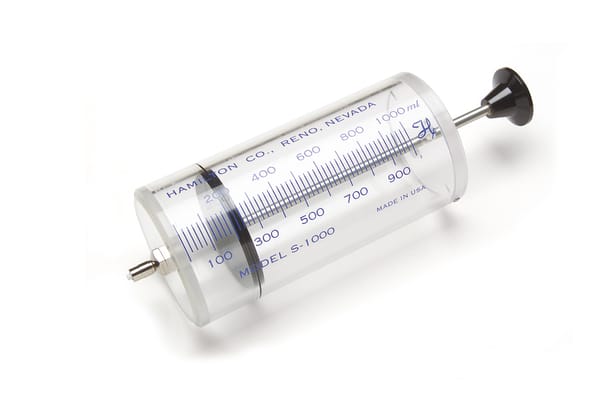
Super Syringes
Super Syringes are extremely high volume Gastight syringes. The work best with volumes between 100 mL to 2 L.
GC Manual Injection
SampleLock Syringes
The Hamilton Gastight SampleLock syringes allow you to collect, store, transport and analyze liquid or gaseous samples. An easy-to-use twist valve and a positive rear stop on SampleLock prevents loss of sample and plunger blowout.

Solutions for the Top 2 Challenges for Petrochemicals, Oil, & Gas Processing Workflows

Ensuring Product Quality
Challenge: Maintaining product quality across large-scale refinery processes can be difficult due to fluctuations in critical process parameters like pH and conductivity.
Solution: Hamilton sensors provide an online measurement of important parameters, enabling precise control during processes like distillation and cracking. This ensures consistent production of high-quality petroleum products.

Monitor Corrosion Probability
Challenge: Harsh conditions in petrochemical workflows can lead to equipment corrosion, compromising operational safety and efficiency.
Solution: Hamilton robust pH, Oxidation-Reduction Potential (ORP), and conductivity sensors are designed to withstand demanding environments.
What Are the Steps in Natural Gas Processing?

Natural gas processing involves a series of steps. After exploration and extraction, the natural gas stream is transported to a processing plant where impurities such as water, hydrogen sulfide, carbon dioxide, and other contaminants are removed. This step ensures the output is quality dry natural gas, suitable for energy generation or industrial use.
Next, gases such as ethane, propane, and butane are separated. These are essential for various industries, from manufacturing to energy production. Once processed, Liquified Natural Gas (LNG) is ready for safe transport and distribution, ensuring it is ready for use in homes, businesses, and industrial applications.
Hamilton sensors monitor key parameters throughout the process, providing online monitoring of process conditions.
How Are Sensors Used in Oil Processing?
In oil processing, sensors are essential for refining crude oil into petroleum products. During the refinery process, sensors continuously monitor critical variables like flow rate, temperature, and pressure, ensuring the safe and efficient operation of the plant. From the production of crude oil to petroleum refining, sensors help optimize each stage by enhancing process control, ensuring consistent product quality, and reducing material losses.
By providing real-time data, sensors enable operators to adjust processes quickly, maintaining safety and efficiency in complex refining environments.
Other Petrochemicals, Oil and Gas Processing Resources
Browse app notes, user guides, specification documents, and more in our Knowledge Center.


Browse app notes, user guides, specification documents, and more in our Knowledge Center.
Browse app notes, user guides, specification documents, and more in our Knowledge Center.
Backed by world-class service and support.
For over 75 years, the Hamilton name has been recognized globally for its unwavering commitment to quality. That pledge extends to creating long-term customer partnerships. We're proud to offer in-depth training courses, on-site field support, custom product builds, and so much more.
Let's Talk
Connect with a Hamilton expert to discuss solutions for your workflow. We are here to enable your success.
Request Type: