Application
PCR Setup
Polymerase Chain Reaction (PCR) is a technique that rapidly amplifies specific segments of DNA with high accuracy, making it essential for genetic analysis and diagnostics. This method is widely used in molecular biology, clinical diagnostics, and pathogen detection. PCR setup demands careful handling of reagents to maintain reproducibility and efficiency.
Advanced methods, such as Reverse Transcription PCR (RT-PCR) and quantitative PCR (qPCR), use this process to either convert RNA to cDNA before amplification or monitor target sequence abundance after each cycle for relative quantification, respectively.

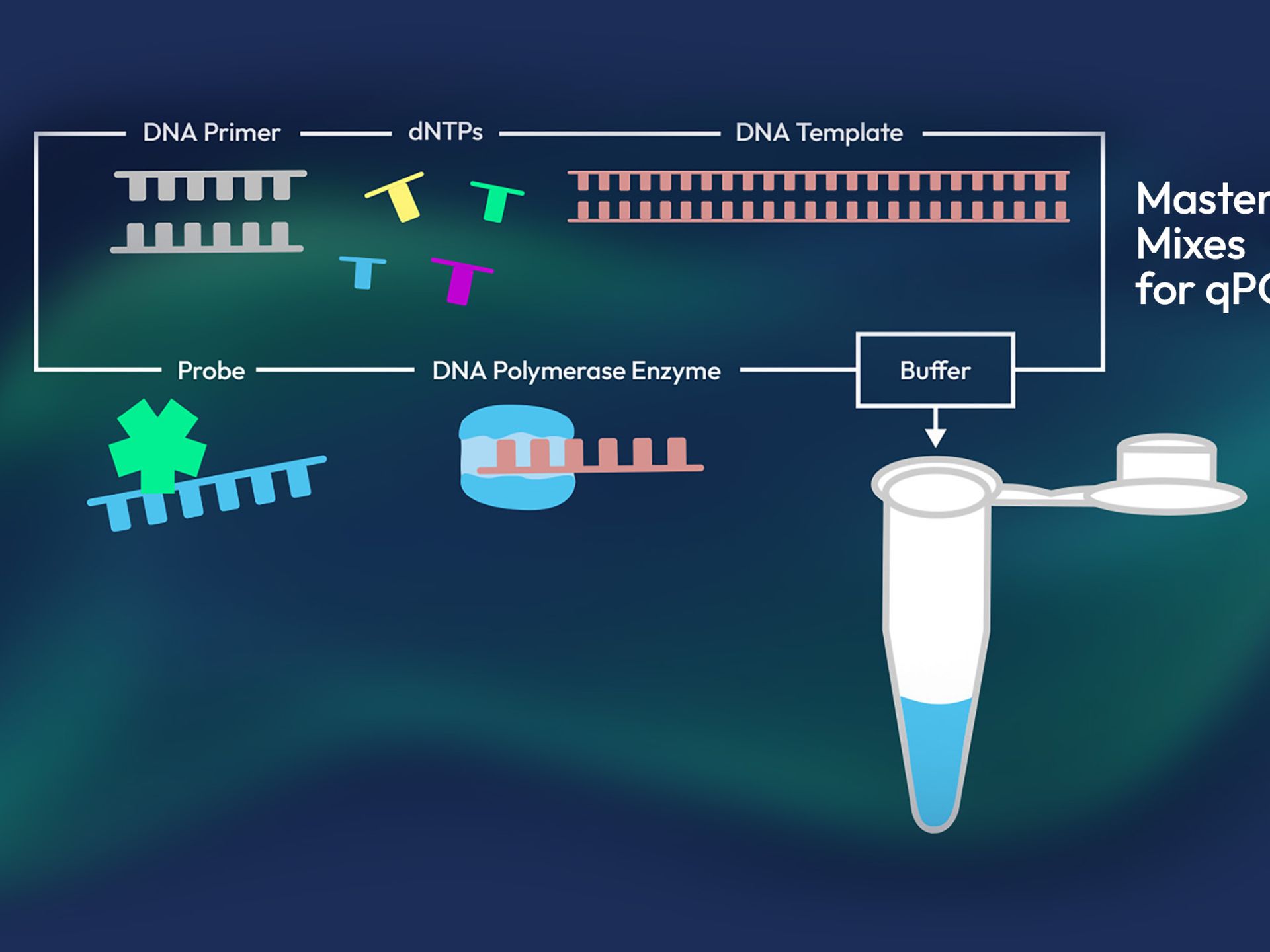

PCR workflows require precise transfer of low volumes of reagents and samples, which is essential to ensure accuracy, efficiency, and reliability.
PCR setup involves combining template DNA, DNA polymerase, primers, nucleotides, and a reaction buffer in precise volumes, ensuring optimal conditions for DNA synthesis. The setup enables the amplification of genetic material through repeated cycling of specific temperature profiles for denaturation, annealing, and extension.
How Hamilton Optimizes Your Polymerase Chain Reaction Setup workflows

Hamilton liquid-handling solutions optimize genetic workflows by simplifying PCR setup, offering intuitive interfaces for assay customization, while ensuring precise pipetting to ensure reliable results and data tracking.
Standardized workstations boost efficiency by automating reaction preparation, delivering faster, more consistent results for research and diagnostics. Moreover, most of our platforms can be customized to perform the full PCR/qPCR workflow with the on-deck or off-deck integration of thermal cycler devices.
Hamilton automated pipetting technologies deliver ultra-precise low-volume capabilities as well as fixed and adjustable-volume manual pipettes, enabling accurate and efficient liquid handling that is ideally suited to support your PCR setup.
Explore Our Solutions and Applications for PCR Setup in Detail
Choose an outcome below to see personalized product recommendations.
The Hamilton Microlab Prep is an affordable liquid handler perfect for automating workflows. This entry-level liquid handler supports automated PCR setup and serial dilution.

The Hamilton Microlab STAR is a reliable and versatile automated liquid handling platform. With advanced features like multi-probe heads, pipetting technologies, and VENUS software, this premier liquid handling system fits your laboratory needs. Revolutionize your workflows with the STAR today!

Hamilton STAR V, a cutting-edge liquid handling robot, unites Microlab STAR flexibility with Microlab VANTAGE high-performance capabilities to boost efficiency. The Microlab STAR V offers speed, precision, and technology for automated liquid handling. Upgrade your lab—explore the Microlab STAR V!

Hamilton VANTAGE 2.0 is a cutting-edge liquid handling system with automated precision. Optimize workflows with the VANTAGE robot, all while boosting performance, safeguarding samples, and maximizing walk-away time. Discover the Hamilton VANTAGE liquid handler for your current & future needs.

Automated workstation
BIOSPOT® Workstation
Specializes in microplate applications, achieving unparalleled accuracy in dispensing nanoliter volumes or compound screening and assay miniaturization.


-80°C Sample Storage
SAM HD Pro
The SAM HD Pro lab freezer is your solution for high-density storage with a small footprint. This compact lab freezer is capable of ultra-low temperatures down to minus 80°C to ensure sample integrity. The SAM HD Pro sample freezer makes automated storage quick and easy.

-80°C Sample Storage
BiOS
BiOS is Hamilton’s premier minus 80°C freezer for medium- and large-capacity storage. This ultra-low temperature freezer maintains the integrity of your biological sample storage throughout automation. With customizable size and capacity, this minus 80°C freezer can be scaled to fit your storage needs.


Lab Syringes
Gastight Syringes
The solution for dispensing both gases and heterogeneous liquids. Hamilton Gastight syringes are equipped with a precision-machined PTFE plunger tip to create a leak-free seal.

Lab Syringes
Microliter Syringes
Hamilton Microliter syringes are ideal for dispensing homogeneous liquid samples not prone to glass bonding or precipitation. With a hand-fitted stainless steel plunger for frictionless movement and minimal wear, these syringes are designed to last.

Good to Know About PCR Setup Workflows
This section provides a selection of additional resources related to the application described on this page. It includes helpful articles, videos, and blogs that offer deeper insights into the topic.
Useful Links
External resources not written by Hamilton but valuable for understanding the topic, such as industry guidelines, explanatory videos, or relevant tools.
Learn about the basic principles of PCR, qPCR and dPCR:
| PCR - Polymerase Chain Reaction | Watch Video |
| qPCR (real-time PCR) protocol explained | Watch Video |
| Digital PCR Principle & Advantages | Watch Video |
Explore how to detect and eliminate contaminations during your PCR setup:
| SLo, Y. M. D., & Chan, K. C. A. (2006). Setting up a polymerase chain reaction laboratory. In Clinical applications of PCR (Vol. 336, pp. 11–18). Humana Press. | Read Article |
Solutions for the Top 3 Challenges for PCR Setup Workflows

Contamination Risks
Solution: Get unwanted contamination under control with Hamilton liquid handlers, featuring UV decontamination, HEPA filtration, and built-in protocols to prevent cross-contamination. Our designated CO-RE pipetting technology ensures aerosol-free tip ejection to further minimize contaminations.

Inconsistent pipetting and setup errors in low-volume pipetting
Solution: Automated liquid handlers like Hamilton STARline platforms provide consistent and precise pipetting, minimizing human error in the PCR setup. Hamilton ultra-precise MagPip technology delivers ultra-precise low-volume pipetting down to 350 nL, ensuring high reproducibility across multiple reactions. This precision is essential for accurate and reliable results in downstream analyses.

Time-intensive and labor-heavy manual processes with many samples limit throughput
Solution: Hamilton automation solutions support scalability, expanding from processing a few samples a day to hundreds or even thousands. Ideal for high-throughput PCR workflows, our platforms support clinical diagnostics, large-scale research, and beyond.
Polymerase Chain Reaction Applications
PCR is a powerful and widely adopted technique for amplifying specific nucleic acid sequences, enabling a wide range of applications across various fields.
In medicine it plays a crucial role in detecting genetic mutations, identifying disease predispositions, diagnosing and monitoring viral infections, and detecting cancer while assessing its progression or severity.
In microbiology, it aids in characterizing microbial species and tracking the emergence of infectious diseases. Additionally, these applications play a vital role in forensic investigations, where they are used to analyze DNA evidence and establish identities.
In cellular biology, techniques such as Reverse Transcription quantitative PCR (RT-qPCR) are often used to detect changes in cellular RNA levels and make conclusions about gene expression patterns under different conditions. RT-qPCR can also be leveraged to confirm the loss- of-function of target genes when using RNA interference.
With the ability to amplify even the smallest amounts of DNA, PCR tests have revolutionized genetic research, clinical diagnostics, and disease management. It continues to drive advancements in medicine, forensics, and microbiology.
How Do Intercalating Dyes and Probe-Based qPCR Differ?
Intercalating dyes (e.g., SYBR Green, EvaGreen) and probe-based qPCR (e.g., TaqMan assays, Molecular Beacons) differ in specificity, sensitivity, and their ideal applications.
Intercalating dyes bind to any double-stranded DNA, making them a cost-effective option for general qPCR applications. However, they lack sequence specificity and may detect non-specific amplification products.

In contrast, probe-based methods are sequence-specific, providing higher specificity, enabling multiplexing, and offering more reliable quantification. While they require custom probe design and are more costly, their accuracy and flexibility make them well-suited for advanced qPCR applications.
What Are the Different Types of PCR?
PCR techniques vary based on their application and detection method. Below are some of the most commonly used types:
- Conventional PCR – Amplifies DNA using thermal cycling without direct detection of products. Often implemented as part of NGS library preparation workflows.
- Quantitative PCR (qPCR) – Also called real-time PCR, quantifies DNA fragment amplification in real-time using fluorescence.
- Reverse Transcription PCR (RT-PCR) – Uses an enzyme called reverse transcriptase to synthesize complementary DNA (cDNA) from RNA before amplification by PCR. It is commonly used for gene expression analysis and viral RNA detection.
- Digital PCR (dPCR) – Partitions a sample into thousands of individual reactions, enabling absolute quantification of target DNA or RNA with exceptional precision and sensitivity.
- Multiplex PCR – Amplifies multiple targets in one reaction, increasing efficiency.
PCR Setup Case Studies and Application Notes


Other PCR Setup Resources
Browse app notes, user guides, specification documents, and more in our Knowledge Center.


Browse app notes, user guides, specification documents, and more in our Knowledge Center.
Browse app notes, user guides, specification documents, and more in our Knowledge Center.
Browse app notes, user guides, specification documents, and more in our Knowledge Center.
Browse app notes, user guides, specification documents, and more in our Knowledge Center.
Backed by world-class service and support.
For over 75 years, the Hamilton name has been recognized globally for its unwavering commitment to quality. That pledge extends to creating long-term customer partnerships. We're proud to offer in-depth training courses, on-site field support, custom product builds, and so much more.
Let's Talk
Connect with a Hamilton expert to discuss solutions for your workflow. We are here to enable your success.
Request Type: